


Super Sticky Mouse Trap Pad
Super Sticky Mouse Trap Pad
BUNDLE & SAVE
Couldn't load pickup availability
- American express payment method
- Apple pay payment method
- Bancontact payment method
- Blik payment method
- Diners club payment method
- Discover payment method
- Eps payment method
- Google pay payment method
- Jcb payment method
- Maestro payment method
- Master payment method
- Mb payment method
- Mobilepay payment method
- Paypal payment method
- Przelewy24 payment method
- Shopify pay payment method
- Twint payment method
- Unionpay payment method
- Visa payment method
-
Ordered
- - -
Order Ready
- - -
Delivered

Super Sticky Mouse Trap Pad



Don’t cover a corner.Cover the route.
Rodents rarely cross the middle of a room at random. This extra-long adhesive pad is built to follow the wall and span more of the path they already use.
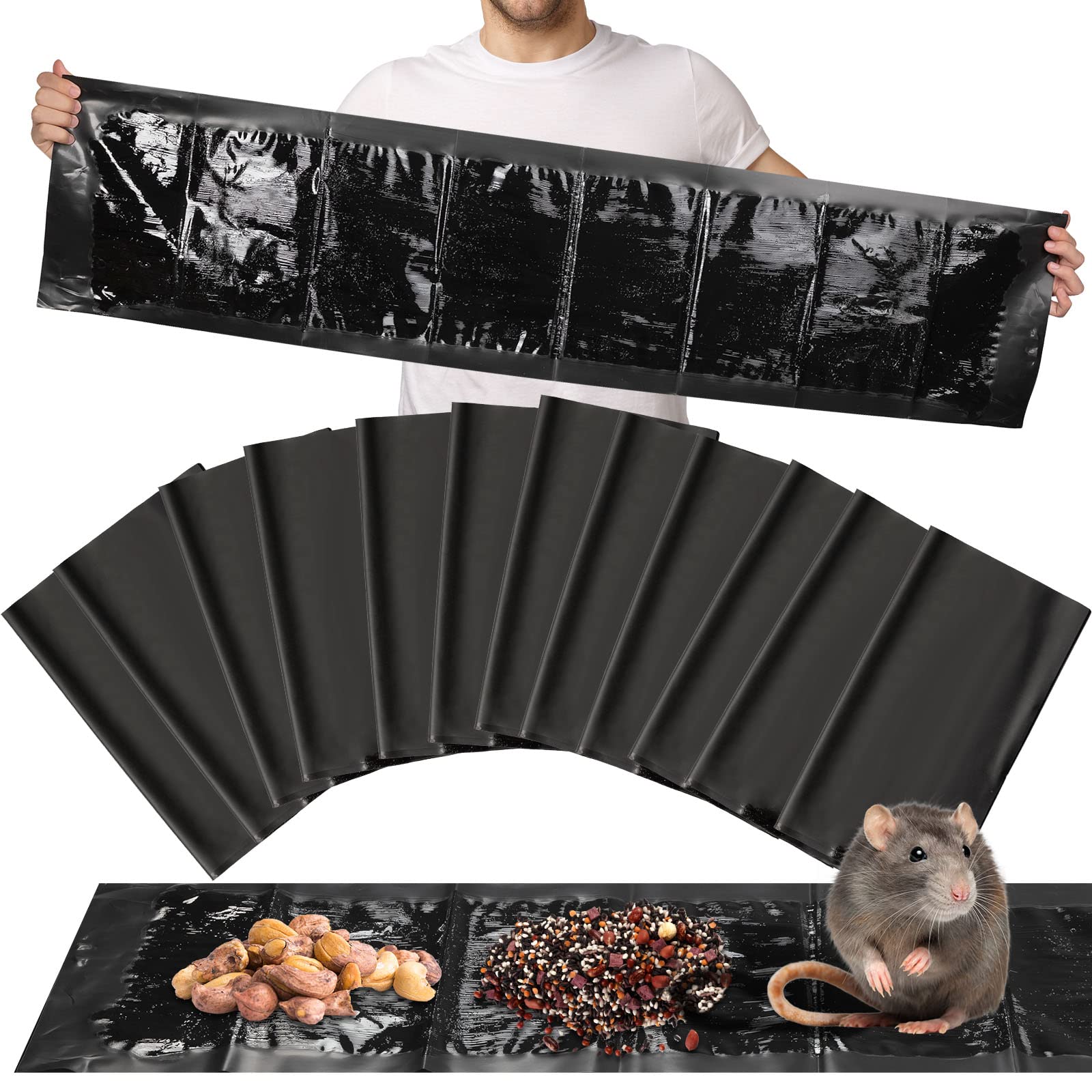

The target is not the mouse.
It’s the pathway.
At 120 cm long, one pad can cover a continuous stretch where several small boards would leave open gaps.
Small boards create choices.
A long pad removes the gap.
Place the long edge parallel to a wall or across a confirmed travel line so the adhesive occupies more of the route.
Illustrative placement diagram. Actual results depend on route selection, surface condition and rodent activity.
Not another palm-sized glue board.
The unfolded pad stretches well beyond the width of the person holding it, while the segmented cloth backing allows it to arrive in a more compact folded form.
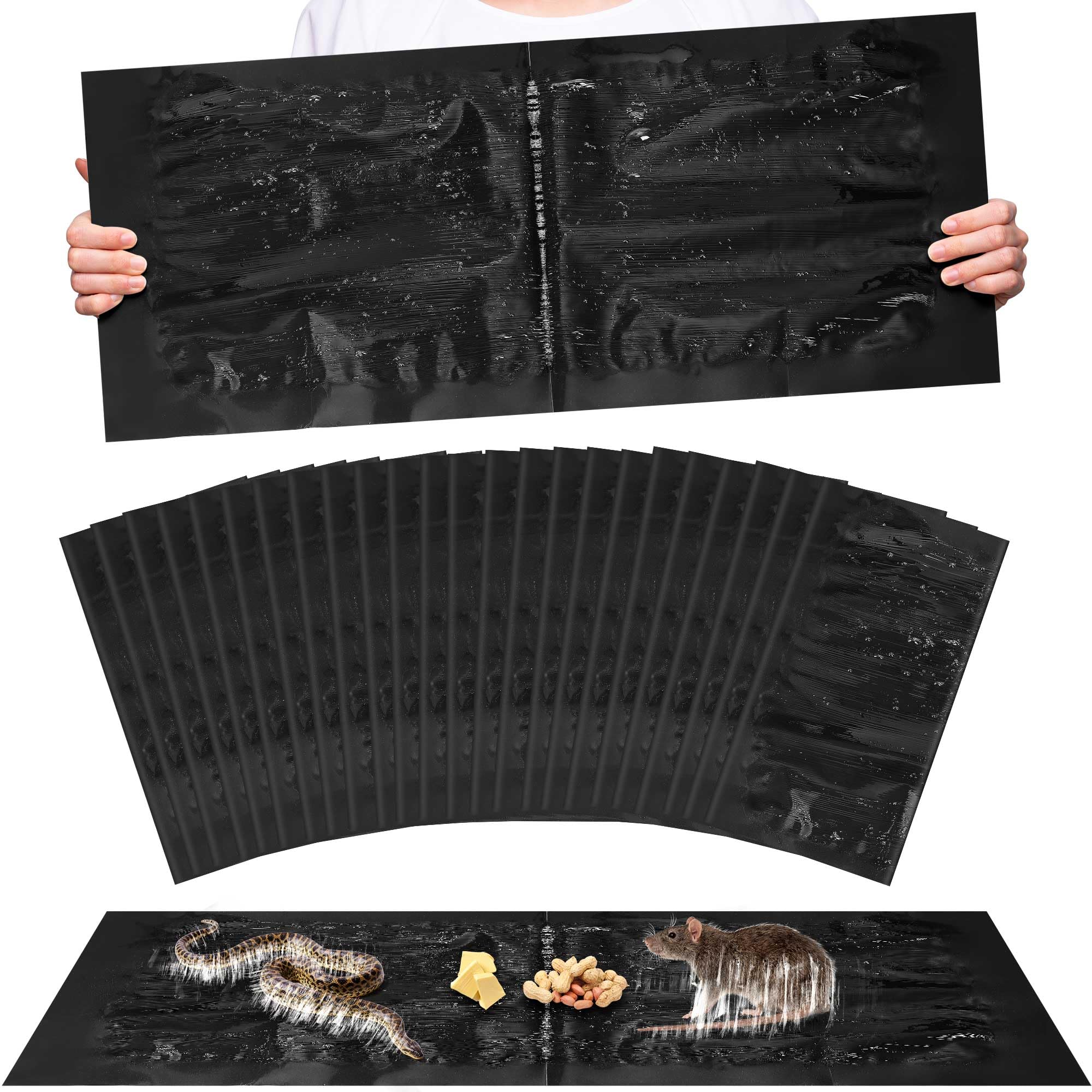
Start where the evidence meets the wall.
Look for droppings, gnaw marks and repeated travel edges. The best-looking empty corner is not always the active route.
Keep the pad flat and close to the edge of the confirmed travel route.
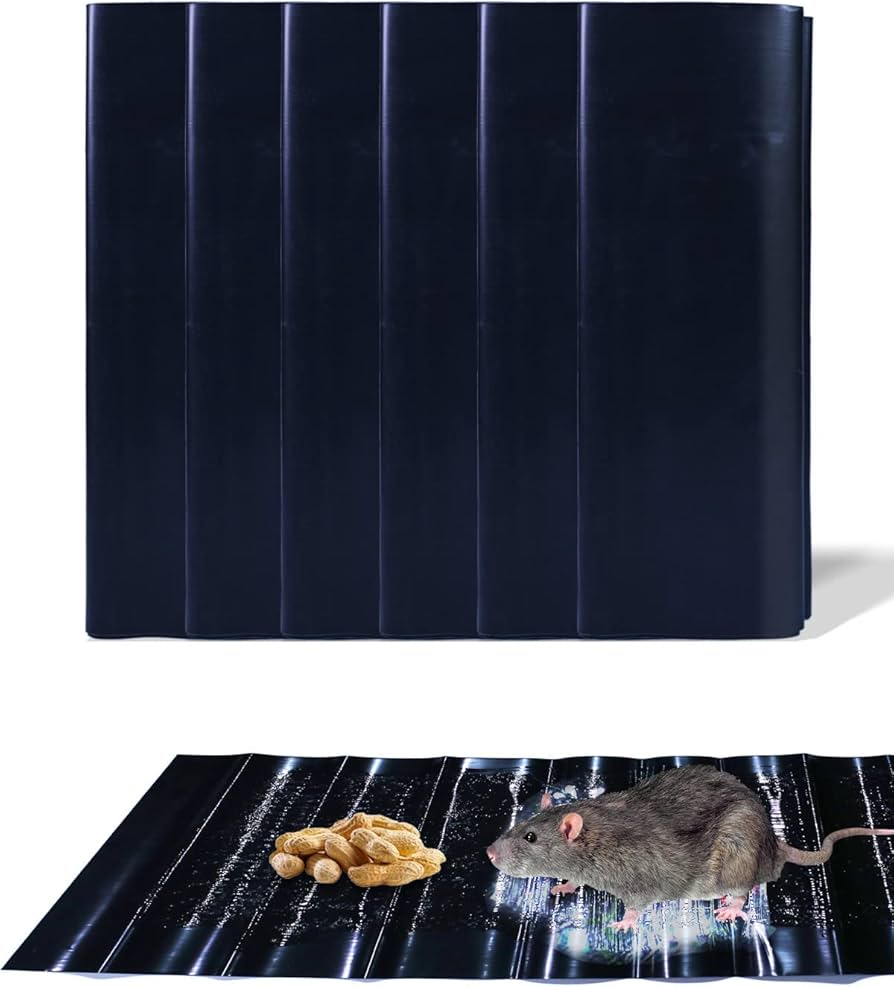
Four steps.
The second one matters most.
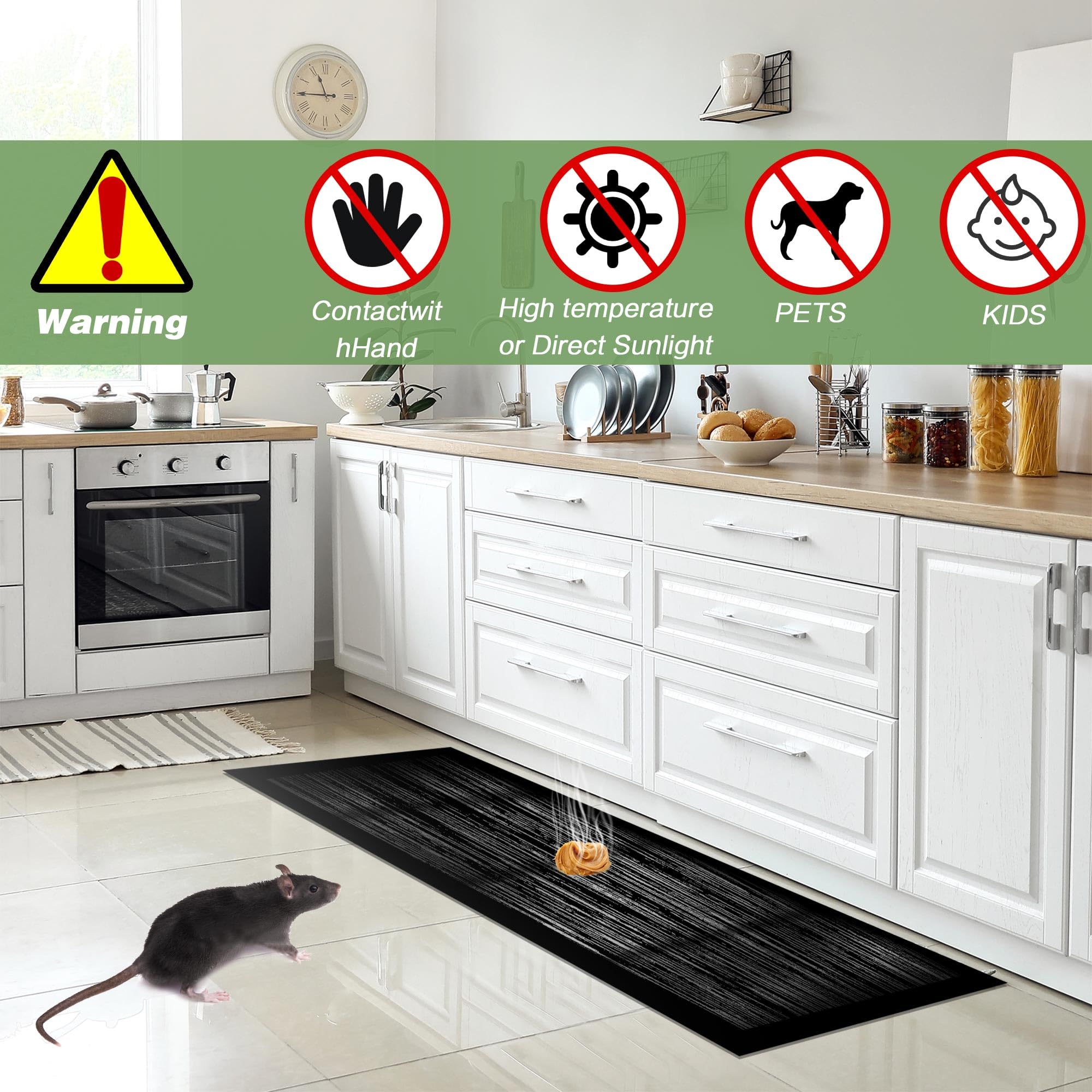
Avoid wet, oily, dusty or sun-heated surfaces; these conditions can reduce adhesive performance.
Strong adhesive still requires a protected location.
The pad controls through adhesion instead of poison, but it must still be kept away from anything that is not the intended target.
Know what arrives.
The listing provides one specification with three oversized pads per pack.
Good to know.
How many trap pads are included?
Does it use poison?
Where should I place it?
Can I use it outdoors?
Do I need to add food bait?
Is it safe around pets and children?
Make the route work against them.
Three extra-long pads give you enough coverage to treat the pathway as a whole—not just hope a small board happens to be in exactly the right spot.